
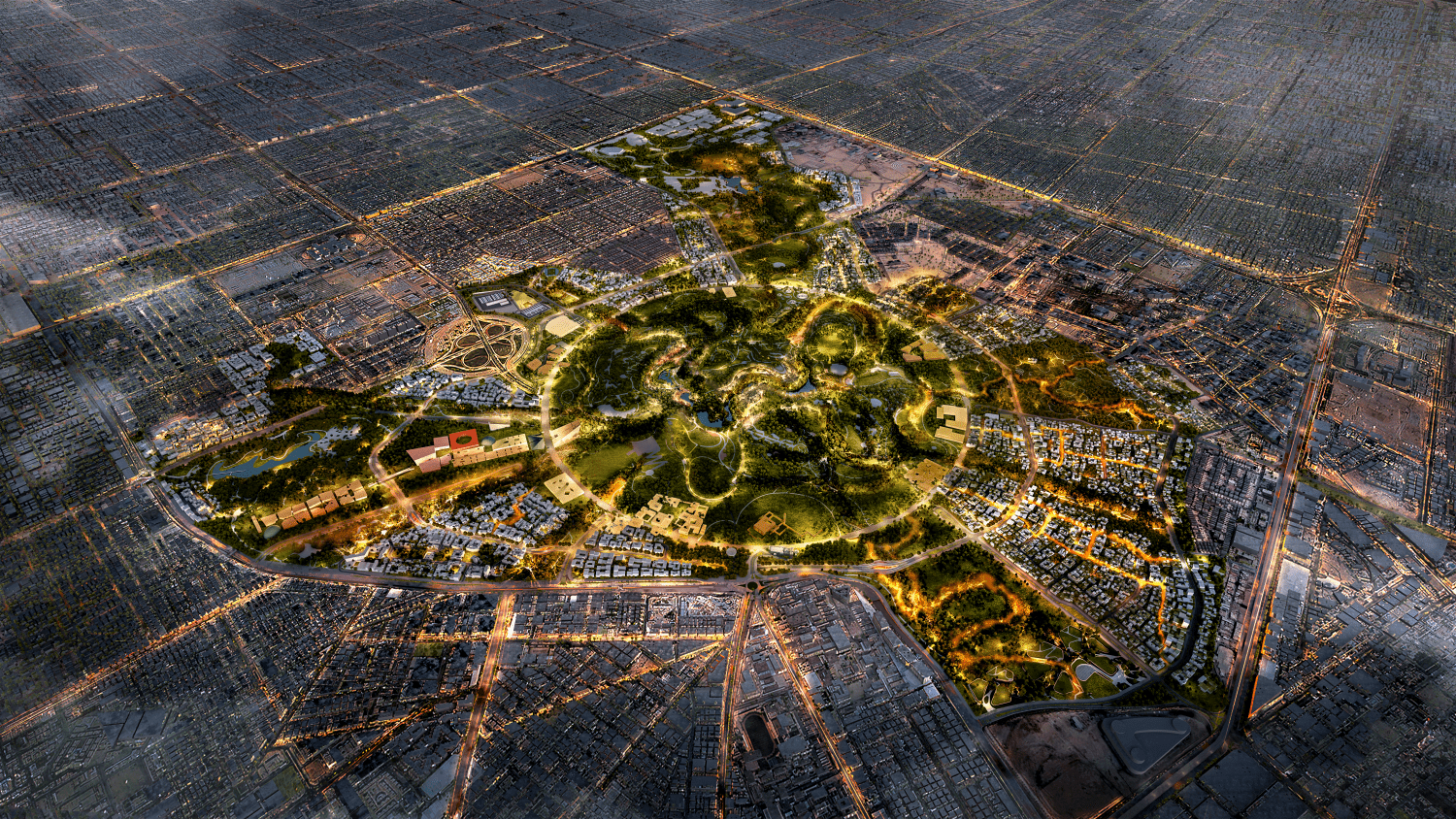
King Salman Park is one of Saudi Arabia’s flagship giga-projects, and it demonstrates how the Kingdom’s long-term national ambitions are being translated into tangible developments that improve everyday life. Launched in 2019, the park reflects Saudi Vision 2030’s commitment to enhancing quality of life through healthier lifestyles, environmental sustainability, recreation, culture, and urban transformation. As one of the world’s largest urban parks, King Salman Park brings together green landscapes, cultural destinations, sports facilities, and tourism attractions within a single integrated development, serving as a powerful example of Vision 2030 in action.
Saudi Vision 2030 Evolution: From Foundation Reform to Human-Centered Development
King Salman Park demonstrates how Saudi Vision 2030 has evolved since its launch. When Vision 2030 was launched in 2016, its initial priorities centered on economic diversification, institutional modernization, fiscal sustainability, and reducing reliance on oil revenues. The Kingdom introduced major reforms across government, investment, regulation, and the private sector to build a more resilient economy capable of supporting long-term growth.
As implementation progressed, Vision 2030 expanded beyond economic reform and the other priorities to place greater emphasis on creating a more vibrant and livable society. This evolution recognized that sustainable development depends not only on economic performance but also on improving daily life for citizens and residents. The introduction of the “Quality of Life” Program reinforced this direction by promoting arts and culture, encouraging participation in sports, expanding entertainment opportunities, enhancing urban environments, and supporting healthier lifestyles.
Introduced four years after Vision 2030, the King Salman Park reflects the Kingdom’s shift from focusing primarily on structural reform toward creating developments that place people and quality of life at the center of national transformation.
While contributing to Riyadh’s economic competitiveness and tourism appeal, the project prioritizes human wellbeing through vast green spaces, recreational facilities, cultural destinations, and public gathering areas. Rather than viewing economic development and quality of life as separate objectives, the park demonstrates how both can be achieved simultaneously through integrated urban planning.
Promoting a Vibrant Society Under Vision 2030
As noted, Vision 2030 promotes a vibrant society in several ways, including by developing King Salman Park.
First and foremost, the vibrant society pillar places quality of life at the heart of Saudi Arabia’s national development strategy. According to the Vision 2030 Annual Report 2025:
- 59.1% of adults now participate in regular physical activity, surpassing the annual target of 55%
- Saudi homeownership reached 66.24%, exceeding its target of 65%
- Employment in the cultural sector grew to more than 282,700 people
These statistics reflect the Kingdom’s continued investment in culture, recreation, and community wellbeing.
King Salman Park directly supports these achievements by creating an environment where recreation, culture, nature, and healthy living become part of everyday urban life. The park features vast green spaces, cultural attractions, sports facilities, cycling and walking routes, family-friendly recreational areas, and open public spaces designed to encourage active lifestyles for people of all ages.
The park also strengthens Saudi Arabia’s growing cultural landscape through landmark destinations, including the Royal Arts Complex, the Outdoor Cinema, Amphitheater, the Visitor Pavilion, an Art Park, and many other museums and cultural and artistic attractions. Together, these attractions create year-round opportunities for artistic-cultural expression and engagement while enhancing Riyadh’s position as a regional cultural capital.
Environmental sustainability is equally central to the park’s design. Millions of trees and plants will increase green space per capita, supporting SGI’s goal of 10 billion trees and broader urban greening initiatives. Carefully designed Wadis and landform features create ecological habitats, provide natural shade from direct sunlight and wind, create cooler outdoor spaces, and enhance biodiversity.
Beyond serving local communities, King Salman Park is becoming a major tourist destination that offers visitors an integrated experience combining culture, recreation, nature, entertainment, and hospitality. In doing so, it supports Vision 2030’s objective of creating globally attractive destinations while enriching everyday life for residents. The park also looks to contribute to tourism employment, an industry that grew to over one million, with 47% women, in 2025.
Vision 2030’s Infrastructure Developments Lead to Saudi Transformation
Vision 2030’s success in driving Saudi transformation is due to a variety of efforts, including a stronger focus on sustainability, greater investment in culture and entertainment, and major infrastructure developments that improve everyday life.
Over the past decade, Saudi Arabia has increasingly prioritized urban livability alongside economic development. Modern infrastructure is no longer measured solely by roads and buildings but by how effectively it creates healthier, more connected, and more sustainable communities.
King Salman Park complements these national investments by offering a wide range of options and quality activities for the city's residents and visitors, reshaping Riyadh into a greener, more people-centered capital. Its 7.2 km pedestrian pathway, called The Loop, is one of many routes that encourages walking, sunning, cycling, and other activities in a landscaped environment. These paths are just some of the accessible public spaces provide outdoor recreation. The park also contributes to environmental resilience through large-scale tree planting and a water-conscious irrigation system that uses 100% grey treated water from the city.
Together with other transformative projects across the Kingdom, King Salman Park demonstrates how infrastructure development can simultaneously strengthen economic competitiveness, improve environmental performance, and enhance the daily experiences of residents and visitors. These investments are helping position Riyadh among the world’s leading livable cities.
Vision 2030 Objectives Achievable Through King Salman Park
Vision 2030’s objectives prove achievable through projects like King Salman Park.
The park brings together many of Vision 2030’s priorities within a single destination, combining environmental sustainability, recreation, cultural infrastructure, tourism, biodiversity, sports, and public wellbeing. The project demonstrates how large-scale urban developments can deliver measurable benefits while creating lasting value for future generations.
As the park continues to develop, it represents the practical implementation of Vision 2030’s ambitions. Its international recognition further reinforces this achievement. In 2025, King Salman Park received the RIBA Middle East Award in the Future Projects category. This recognition, along with the many other awards the project has received, reflects global appreciation of the park’s innovative approach to urban development and its contribution to enhancing the quality of life for the people of Riyadh.